VALORANT Champions Shanghai group stage delivered a brutal Day 8 that erased every Chinese team from the bracket
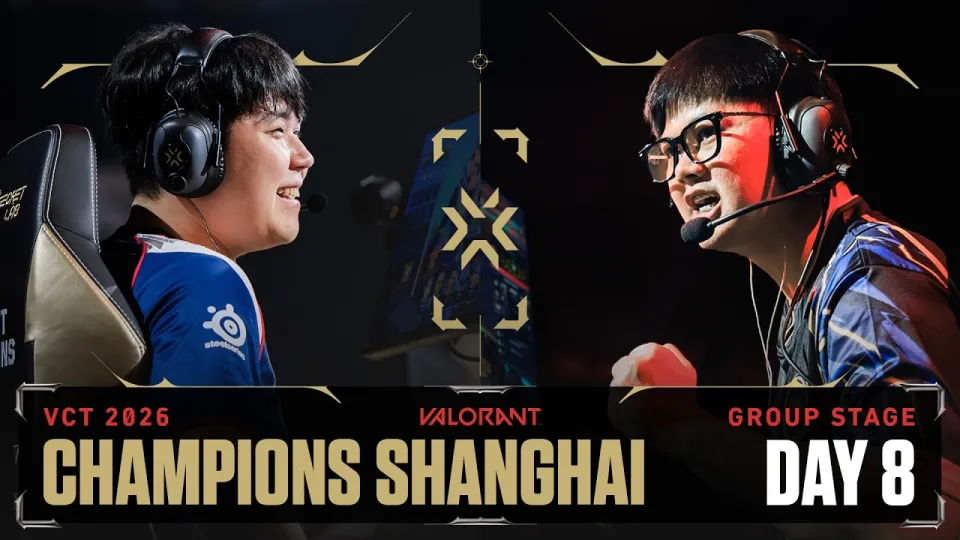
Video: VALORANT Champions Shanghai — Group Stage — Day 8
Want articles like this for your own video to promote it on YouTube and Google? Order them through the Telegram bot @sat_sit_bot. Articles with your video embedded are written and posted by the bot itself — on popular topical sites (no ads). Try it free: 50 articles on us.
· based on the channel VALORANT Champions Tour
VALORANT at Champions Shanghai is the 2026 world championship, and Day 8 of the group stage was the day the bracket stopped being polite. Sixteen teams from Americas, CN, EMEA and Pacific arrived in Shanghai for a tournament running from 24 September to 18 October, and the eighth day of group play removed the last Chinese roster from contention. For anyone tracking the event through the official channels, live updates and clips land fastest on the VALORANT Esports X account, which is where the tour posts schedules, results and bracket changes as they happen.
What actually happened on VALORANT Champions Shanghai group stage Day 8
Day 8 was built around a single elimination series: T1 versus JD Gaming, best of three, with the loser going home. The broadcast opened with game one, hit a technical pause partway through, and then rolled into games two and three without a break in tension.
The shape of the series mattered more than the scoreline. JD Gaming took control of the opening map and reached a 6-11 lead, a position that would normally be enough to close a map out at this level. They did not close it. T1 clawed the map back, and the momentum never returned to JDG — the third map in particular was described by viewers as a collapse rather than a contest.
The result completed a clean sweep: every Chinese team at the event was eliminated during the group stage. For a Champions hosted in Shanghai, with the domestic crowd behind them, that outcome became the story of the day across every VCT discussion thread.
The 6-11 lead that decided the series
Map one of T1 vs JD Gaming is the single sequence worth rewinding. A 6-11 deficit is not a small hole in professional VALORANT — it usually requires the trailing team to win a pistol, convert the bonus, and then win at least one more round on the opponent's economy. T1 did exactly that.
Three things made the comeback possible:
- T1 stopped giving JDG free entries on attack, forcing the Chinese side into slower, more predictable executes.
- Utility usage flipped. JDG's setups started getting read, and the Crown — one of the most impactful ultimates in the current meta — was repeatedly silenced or neutralised before it could convert a round.
- The economy snowballed. Once T1 strung together a pistol and a bonus, JDG were playing from behind on buy rounds, which is the worst place to be when your map lead is already shrinking.
The audience reaction was immediate. The most-liked comment on the broadcast called the silenced Crown the most satisfying moment of the entire match, which tells you how much of the comeback hinged on shutting down one piece of utility.
Why the Chinese region's exit is being read as a structural problem
Four Chinese teams entered the group stage and four left it before the playoff bracket. That is the fact, and it is not in dispute. What is disputed is why.
The most common argument in the comments is that the region's slots are not earned. Chinese organisations receive dedicated VCT slots as part of the regional structure, and critics argue those slots should be reallocated or the region should be folded back into a broader APAC pool. The counter-argument, which got more traction, is simpler: the Chinese teams simply were not ready for the level of opposition at a global event, and playing at home added pressure rather than removing it.
There is a third reading that deserves more attention. The "regional curse" idea — that playing on home soil is a disadvantage — does not hold up well. Most teams perform better with a home crowd, and the Chinese rosters were no exception in terms of atmosphere. The gap was mechanical and tactical, not psychological: slower adaptation to the international meta, weaker mid-round calling under pressure, and a habit of losing close maps they had already controlled.
JD Gaming's 6-11 throw is the clearest example. That was not a crowd problem. That was a closing problem.
The technical pause and the production questions around it
The first game of the day was interrupted by a technical pause, and the broadcast resumed after a short break. Pauses are routine at VALORANT Champions, but they are also the moments where viewers start asking questions the production cannot answer live — what broke, whether it was server-side or client-side, and whether the affected team loses momentum.
A separate cluster of comments focused on hit registration. One timestamped clip showed three bullets apparently connecting with Omen while the HUD registered only two, and another round drew complaints about a shot that looked like a headshot but was not counted as one. These are the standard arguments of any FPS broadcast, and Riot's server-side tick rate means the replay you see on stream is not always the authoritative version of the round.
One thing the broadcast did well: the pause did not break the pacing of the day. The schedule held, and all three maps of the headline series were played out in full.
What Day 8 means for the rest of the Shanghai bracket
With the Chinese teams gone, the playoff picture is now entirely in the hands of Americas, EMEA and Pacific rosters. That has two consequences worth tracking.
First, the crowd dynamic changes. A Shanghai arena without a home team is a different environment — louder for the international favourites, quieter in the dead rounds, and noticeably more neutral in the chants. Teams that feed on crowd energy lose a little of it.
Second, the seeding gets simpler. The group stage exists to sort sixteen teams into a bracket, and with one region fully removed, the remaining matchups are cleaner to predict. Pacific in particular looks stronger than its pre-tournament billing, and T1's comeback on Day 8 is the clearest evidence of that.
For viewers who want the full group stage picture rather than a single day's summary, the official channels are the reliable source. The tour's X account posts results, bracket updates and schedule changes, and it is the fastest place to confirm a scoreline before the highlight channels catch up.
Useful links
- X / Twitter: https://x.com/valorantesports
- Facebook: https://www.facebook.com/ValorantEsports/
- Instagram: https://www.instagram.com/valorantesports/
- TikTok: https://www.tiktok.com/@valorantesports
- Twitch: https://www.twitch.tv/valorant
What Day 8 leaves behind
Day 8 of the VALORANT Champions Shanghai group stage answered the biggest question hanging over the tournament: whether a Chinese roster could survive a global bracket. The answer was no, and JD Gaming's lost 6-11 lead on the opening map is the moment that decided it. T1 advanced on the back of a comeback that was built on utility denial and economy control rather than raw aim, which is the version of VALORANT that wins at Champions. The rest of the bracket now belongs to Americas, EMEA and Pacific, and the pressure shifts to the teams that were expected to be here. This breakdown was put together from the official VALORANT Champions Tour broadcast — follow the VALORANT Esports X account for the playoff schedule and every result as it lands.
Key takeaways
- Day 8 of the VALORANT Champions Shanghai group stage ran on 2 October and featured T1 vs JD Gaming across three maps.
- All four Chinese representatives were eliminated in the group stage, including JD Gaming after a 2-0 lead slipped away on the opening map.
- JD Gaming held a 6-11 advantage on map one and lost it, a collapse the VCT audience treated as the defining moment of the day.
- A technical pause interrupted game one of the opening series, splitting the broadcast into two long blocks.
- The Shanghai crowd watched a Champions event hosted in the region with the weakest international results of the 2026 season.
Source: VALORANT Champions Shanghai — Group Stage — Day 8 · Markdown version
Questions & answers
Did any Chinese team make it out of the VALORANT Champions Shanghai group stage?
No. All four Chinese representatives were eliminated during the group stage, and JD Gaming's loss to T1 on Day 8 removed the last one. It was the headline story of the day, especially given the event was hosted in Shanghai.
How did JD Gaming lose after leading 6-11 on the first map?
They failed to close out a map they controlled. T1 won a pistol and a bonus round, flipped the economy, and repeatedly neutralised JDG's Crown utility before it could convert rounds. Once the lead shrank, JDG were buying from behind and never recovered the map.
Was the technical pause during the first game a big deal?
It was a routine broadcast pause rather than a match-defining incident. The schedule held and all three maps of the headline series were played. The more persistent complaints in the comments were about hit registration, which is a server-side issue rather than a production one.
What does the rest of the Shanghai bracket look like now?
The playoff field is entirely Americas, EMEA and Pacific rosters. Pacific looks stronger than expected, with T1's comeback as the clearest evidence. The Shanghai crowd also becomes a more neutral factor without a home team in the arena.